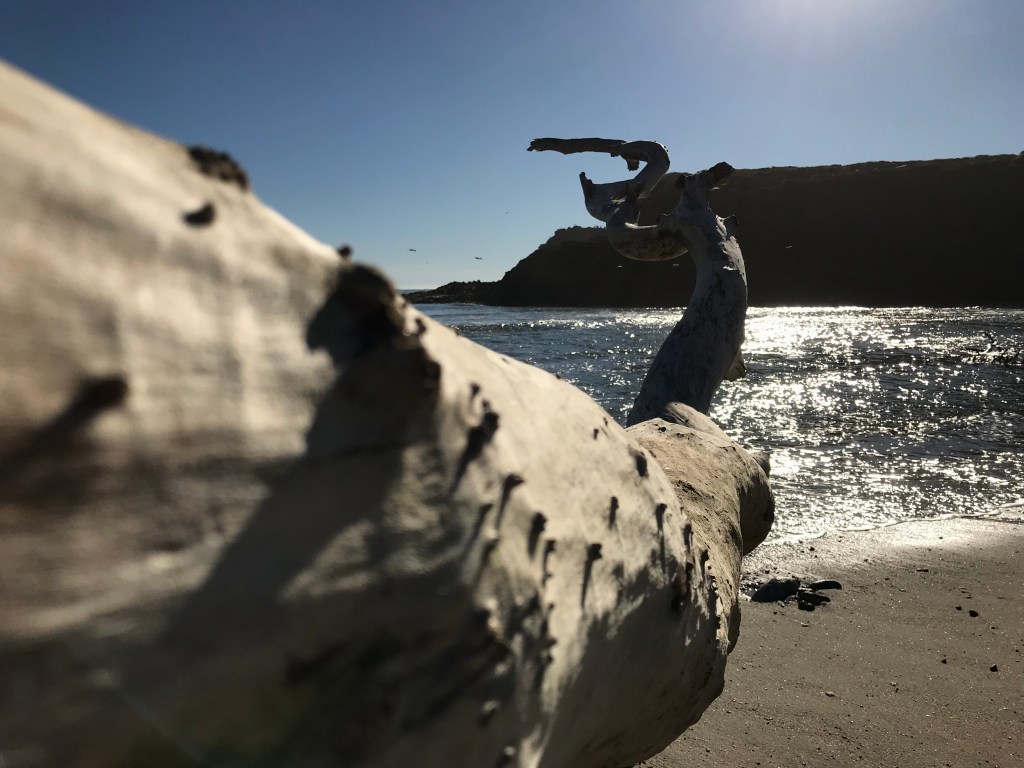
You might call it slowly destructive, but you might also see in shoreline erosion that the variable cycles of sea energy help the shore gain a kind of wisdom. The land recognizes that the ocean, although aggressive as it cracks upon the sand, is its cohort. The rock promintories take the rougher assaults, where the surf is higher, which results in fragments that return to nourish the beaches or build the sandbars. The shoreline is created by the force of the breakers and the shoreline is as ageless as the sea. Not one without the other.
In the Summer, sand is deposited off shore to those sandbars with the gentler winds and waves. Strong Winter Northeasters bring the sand and sediment back to the shore and cause some higher segments of the beach, dunes, to erode. This thins the beach overall. But the wise sandbars, built in the summer, mitigate further shoreline erosion during the winter months by causing many waves to break further from the shore. This relationship is like that of the cohorts of the body and the mind. When one is burdened the other assists, moving the body or mind to take a break, step away or protect the overall ecosystem from one or the other’s central preoccupations. It lets things productively change and heal. The regulation of further erosion provided by sandbars built in the summer is a metaphor for the reserve of counterbalancing energy humankind has always needed to get through our winters.
Haiku a day until Midwinter
haiku: monterry winter
a mind freshly wringed kindly salted erosion balms greeting the shore
swiftest of gliders once you were swimming this pond a lotus now blooms
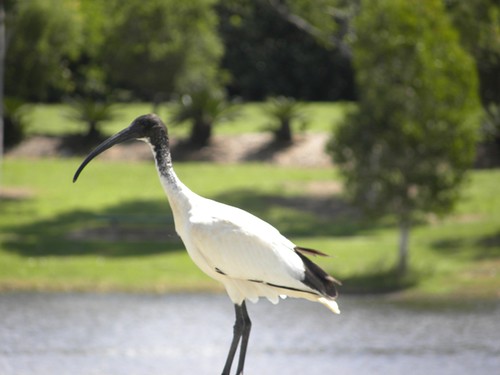
the story of the african sacred ibis
It is estimated that millions of the birds were sacrificed by Egyptians to Thoth, a deity commonly represented in art as a human with the head of the bird. Thoth was endowed with the gifts of wisdom, science, written language, judicious thought, magic, and art. Toth was held as a deity between 6000 to 30 BCE. It’s long been held that the Egyptians must have farmed the birds to keep a steady supply for ritual sacrifice. There is very recent DNA evidence from bird mummies suggesting they may have only been wild caught and kept in some sort of stockyards. It’s too early in the research to flip the the long held theories.
The African Sacred Ibis is extinct in Egypt, but prolific in sub-Saharan Africa. It is unlikely that it will be re-populated in Egypt. The immense expense and effort seems to be only justified by cultural interest.
“Hope is a thing with feathers…”
With its standing in spiritual history symbolizing intellect, wisdom, art and judgement; that it was sacrificed in large numbers; that it is extinct in parts of Africa but thriving in others, all make the bird, I think, an approriate symbol for the difficult history of the AIDS epidemic, our responses to it and the new hope in our world’s time for recovery. That recovery is one of our souls as we find the will to help our beloved people in both the broad daylight of nearby locales and the forgotten corners of the world still suffering without prevention knowledge and appropriate care. I will invoke the most durable quotation I know on the subject of hope on any occassion it is needed:
"Hope is a thing with feathers
That perches in the soul-
And sings the tune without the words-
And never stops-At all-"
-Emily Dickinson
Hope is fair treatment and prevention, erradication of stigmatizing prejudice, education and compassion. “Hope is a thing with feathers” and, indeed, “it never stops” and because of this, it will never be lost.
I woke up today knowing this exercise I assigned myself of a haiku a day until Midwinter (December 21) is going to be only about snow and ice without introducing some new variable. They aren’t all going to be gems either. I’m using the form as a piano student would use etudes: develop poetic muscle memory for long form workings. But, back to the problem of winter haiku. I remembered it’s not snow and ice everywhere.
off-road haiku: Jack Kerouac
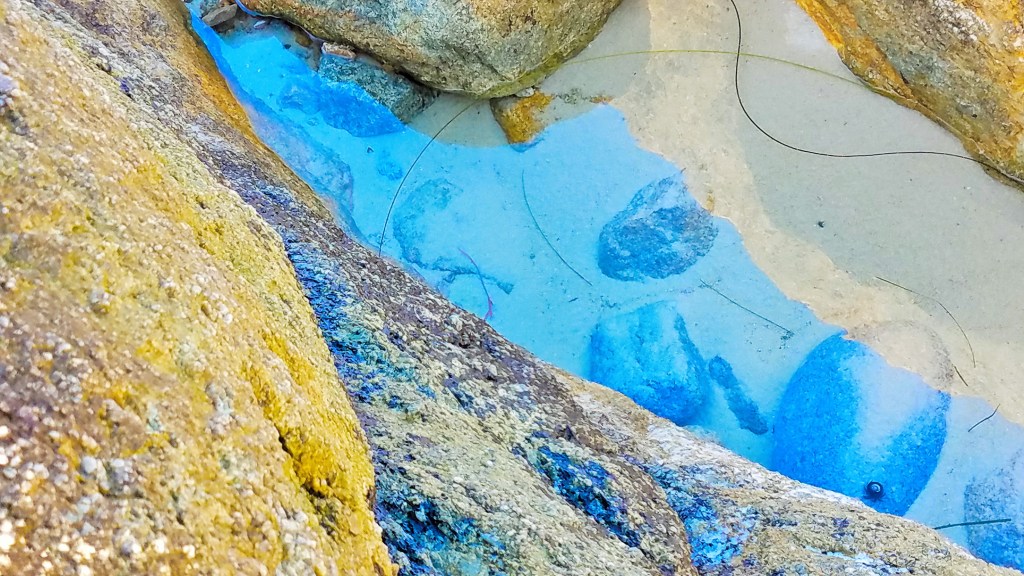
Near this time last year, I was in Big Sur gazing at tide pools: cold, rock-bound baths surging with tiny, undulating marine lifeforms in cold, transparent Pacific blue water. I was a stone’s throw from the shack near Bixby Bridge where Kerouac wrote his novel Big Sur. It was poet and City Lights bookstore founder, Lawrence Ferlinghetti’s cabin. He was trying to do Jack a favor. Kerouac was living a nightmare at the time and attempted to dry out from his alcoholic haze (after On the Road). But if you read this novella, you’ll find that Kerouac just about jumps out of his skin with every unfamiliar sound from nature. He’s terrified of the extreme dark skies. It wasn’t successful therapy for poor Jack. Nothing was in the long term unfortunately. What may have brought him some peace was his move to a dharmic investigation of his own essential character in relation to the cosmos. His work with haiku and Buddhist principles suggests he was doing that work. He went “off-road,” in my assesment, from the pure constraints (5-7-5). Some call it “western haiku.” But he was well disciplined, often using three simple stanzas with all the delight, rhythm and swing he always maintained in his most sprawling, nearly punctuation free work.
Anne Waldman on the “Transcendent Friend”
In his haiku, he wrote generously (he’s said to have written at least 1000) and he wrote of generosity. He thanked the natural world that seemed to repel him in Big Sur. Anne Waldman, the prolific and profoundly talented poet, captured the notion in her “Vow to Poetry,” calling generosity the “Transcendent Friend.” She would know. Her generous work in her school and the community of writers is well established.
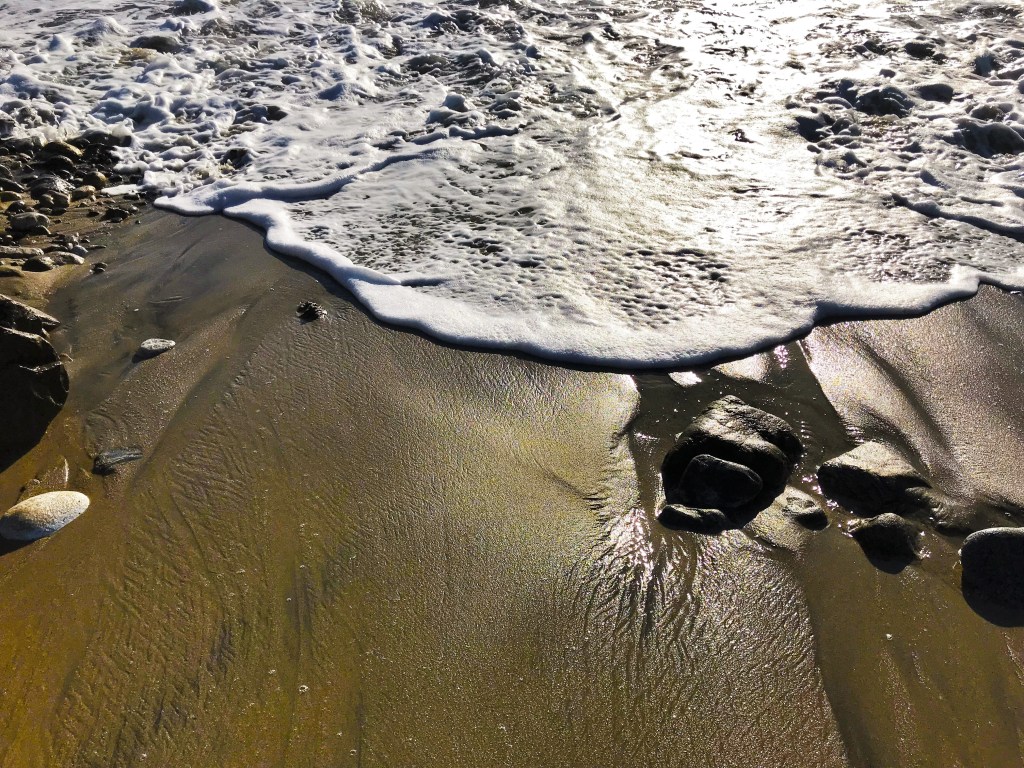
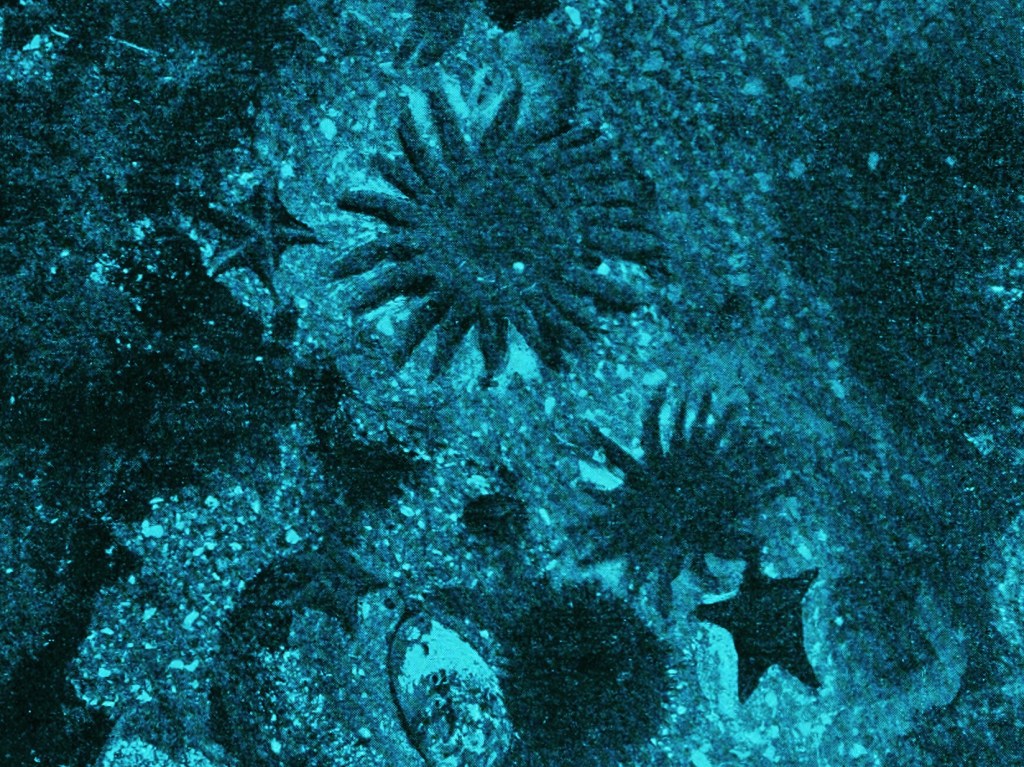
The writing school she co-founded at Naropa Institute in Boulder takes Kerouac’s name. Denverites are fortunate to attend her readings and curated performances just 30 miles up the highway and turnpike from Capitol Hill. With these lines in “Vow to Poetry” she was paraphrasing a Buddhist read made at meal times that goes on to say: “Generosity is the virtue that produces peace.” This is a unifying principle to Jack’s presumed quest for inner-peace, Waldman’s work in the world, the purpose of poetry in genral, haiku in specific, and just being human. I’ll endeavor to hold true to the principle when posting here. Carefully walking to observe life in the tide pool, like a parent bathing an infant, and discovering the companion forms of things that are shaped by nature–these are the subjects of the haiku posted here. Starfish are echoes of hands. Tide pools are the twins of the ocean. Generosity is our Transcendent Friend.
Tide pool near Big Sur
today’s haiku from the blog’s author
 haiku pair:  tidepool, big sur + the bath

 1
 rock bound sea traces
 afloat with five-armed sea stars
 dancing in the wash

 2
 tub of bathwater
 my daughter’s infant palms splash
 rising as starfish
 Wild, Abandoned
You must be logged in to post a comment.